TMS & Cognitive Training for Memory & Cognition
Making your best years truly the best.
TMS paired with Cognitive Training to improve memory function, whether for professional reasons or to get the most from your best years.
Age-related memory decline affects approximately 40% of us as we age. At Optimind, our focus is to improve memory function using Repetitive Transcranial Magnetic Stimulation (TMS) paired with Cognitive Training.
How TMS helps
Using MRI-strength magnetic pulses, TMS stimulates targeted areas of the brain, strengthening the connections between neurons over a course of treatment. At Optimind, TMS is paired with Cognitive Training to amplify the effect of both, supporting memory, attention, and executive function. It is painless, drug-free, and carries minimal risk.
Cognitive Training with RehaCom
Optimind uses RehaCom, a software platform developed by neuropsychologists and refined over more than 20 years. It begins with a screening assessment that measures cognitive function against an averaged baseline, then recommends targeted training modules. Common modules focus on attention, executive function, working memory, visuospatial skills, problem solving, and communication. Difficulty adjusts automatically to keep gently challenging you, and progress is tracked throughout so you can see and feel the results.
*TMS is not yet a funded treatment in British Columbia.
Considering TMS for memory?
Most clients start with a complimentary consultation to learn how we can help.
or call (250) 360-6998
What the evidence shows
A combined approach
Optimind pairs TMS with RehaCom Cognitive Training to amplify the effect of both, with progress tracked using objective, validated tools.
Your physician will review the current evidence with you and whether this approach is appropriate for your goals.
Research & references
Peer-reviewed studies on TMS for memory and cognition.
All links open external sources.
What to expect
Treatment is straightforward and well supported: a consultation and assessment, your course of painless sessions, then evaluation and follow-up. Our team is with you at every step.
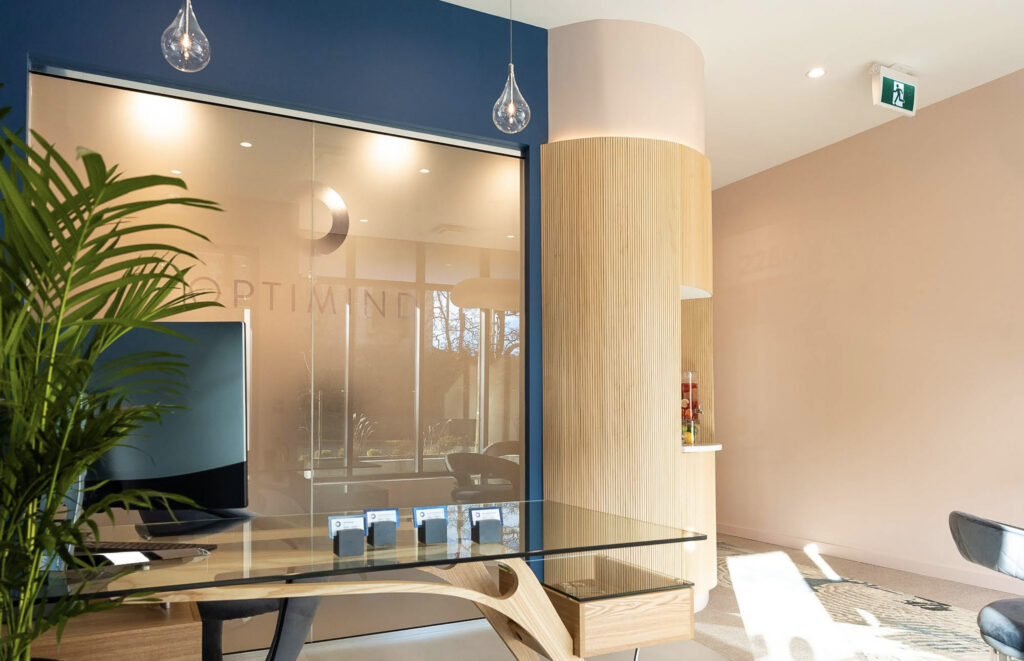
Together, our highly skilled team holds decades of medical and technical expertise
Frequently asked questions
Can I drive myself home afterward?
Yes. There’s no sedation and no recovery time, so you can return to your normal day immediately, including driving, work, or activities.
Does TMS hurt?
No. TMS is painless, with no systemic side effects and minimal risk. You recline in a comfortable chair while a technician delivers the treatment; most people read or relax.
How long do I have to rest after a TMS treatment?
TMS is a very simple treatment and doesn’t require any special attention after a session. You can drive home or even return to work right after a session.
How long does an appointment take?
Appointments are scheduled for a half hour. During treatment, you will be awake in a comfortable chair.
How long is a course of treatment?
TMS protocols run either once a day over a seven-week period, or condensed over five days. Your physician recommends the protocol best suited to you.
I’ve heard of the SAINT Protocol, does Optimind offer accelerated TMS?
We do offer an accelerated treatment option where deemed appropriate and desirable by our medical staff and client.
What is cognitive training?
For some treatment plans, a short cognitive training session follows immediately after TMS to reinforce the treatment. Your physician will let you know if it’s part of your plan.
What is the typical course of TMS Therapy?
TMS therapy requires a course of treatment sessions. The initial course of treatment typically consists of 35 sessions, which are either delivered as one session per day, five days per week for seven weeks, or seven sessions per day for five days.
Other conditions we treat
Take the first step toward feeling better.